Hello RSS readers (since no one is checking this site, the only people who could possibly be reading this post are people who put Scribble Theology into an RSS reader and forgot about it),
Scribble Theology, as a personal blog, is dead. I think it started when my video blog became a theology-themed entertainment endeavor; the crossover with the "write whatever I want" that was the original purpose of this blog became too difficult for me to figure out and managed. And while the blog lurched forward for years after that, it was never going to make it.
Scribble Theology, as a brand, has an uncertain future. Sometimes I think about continuing the video blog, or starting a podcast, or continuing to write but in a more intentionally focused way. If any of those things happen, it will likely not be soon, as I have other projects I am working on.
One of those is a restart/reboot personal/hobby blog effort, Novice Adulting. I know a couple of you may have followed my previous reboot efforts, which were really half-hearted. This one feels more legitimate, though I will not commit to maintaining any regular schedule. Still, if you have been a fan of my writing, that's where to go next.
I just spent the last couple hours reading over my old posts. That sentence used to have a comma in it, but I'm not sure how to express what I want to say... I feel pride and fondness and gratitude, but it's really all my own work, so how do I connect it with a platitude for whoever is reading this? I mean, there was more comment engagement than I remember. I enjoyed re-reading those, and thank you for everyone who's made this at least a little bit two-way.
I guess of all the blogs I've started, abandoned, and/or closed, this one has the most memories. It has the most depth. It's easy to let go of stuff you don't care about; harder to let go of things that have meant a lot. And as a place to muse in longer form than is typically preferred in the Facebook/Twitter/Tumblr world, this meant a lot.
But as The Next Generation reminded us, all good things must end. The truth is this ended a while ago and I've just been refusing to acknowledge it.
I hope to see you as I work on future projects. It's been real.
-Nico
Tuesday, December 06, 2016


Friday, June 06, 2014
On maleficence
(Originally posted on my new personal blog.)
In the over a year that I have not really been an active blogger, several topics have made it onto a list of things I really want to blog about. Knowing, however, that my thoughts on these topics are bound to wane in poignance as well as timeliness, I'm going to skip straight to what made me sit down tonight.
I went to see Maleficent tonight, and I have some thoughts.


In the over a year that I have not really been an active blogger, several topics have made it onto a list of things I really want to blog about. Knowing, however, that my thoughts on these topics are bound to wane in poignance as well as timeliness, I'm going to skip straight to what made me sit down tonight.
I went to see Maleficent tonight, and I have some thoughts.
Maleficent is both the title of the movie, and the eponymous hero/villain played (awesomely!) by Angelina Jolie. The movie is based on "Sleeping Beauty" Disney's Sleeping Beauty (1959), but is recast to tell the story from the perspective of the villain. Like Frozen and "The True Story of the Three Little Pigs." (Spoilers to follow.)
I came out of the movie with some very specific critiques. Like, isn't it hard to make a protagonist out of someone whose name literally means "evil?" Or, I get the whole "bad deeds out of anger and revenge" stuff, but I don't see how that motive connects to proclaiming oneself a queen. It seems like a place where splitting from the original story might be OK. (Disclaimer: I have never seen Sleeping Beauty.)
Here's my big complaint, not just about Maleficent, but about kind of like every Disney movie ever made: they always manage to spin things so that the villain dies, but the hero doesn't have to kill him. The death is usually a direct result of the villain's murderous actions. And often, there is a moment preceding the villain's death where the hero decides not to kill them, or even attempts to save them.
Here's why that is problematic: It gives us the visceral satisfaction of seeing the hated character die (or otherwise suffer--like here), without the moral complexity of seeing our hero commit the sin of killing. It programs us to think good guys are good, and bad guys die.
This isn't a pacifist rant. I watch plenty of violent TV and movies, and I do work that sometimes requires violence. My problem is the sanitation of the violence -- similar to, though not the same as, the violence without consequences we so often see. I can watch Game of Thrones, but the violence in SpongeBob SquarePants makes me sick.
(No, that's not Disney -- but it is the most disgustingly violent show on television.)
Wednesday, November 13, 2013
In which I don't understand being saved
My junior year of high school, I went with my girlfriend to a Bible study at her friend's house. At some point during the evening we split up into pairs, and I wound up in a small loft, seated on the floor across from a girl I'd never met so we could "share our stories" with each other. Almost immediately, her question for me was, "When were you saved?"
I'm not the kind of Christian that has an answer to that question. I definitely didn't know what to say then, having never been asked before and not really knowing what "saved" meant, so after fumbling around for a while for an answer, I offered:
"Um... always?"
I actually did have what was supposed to be a "saved" experience the year before; it's just nobody had bothered to tell me that's what it was supposed to be. It was at Acquire the Fire, a big indoctrination program Christian event where you go to experience an incredibly long rock concert interspersed with the occasional awkward dramas and sweaty preachers. They asked for those who wanted to accept Jesus into their hearts to come forward, and I thought, "Well heck, that sounds like something people should do."
So I went down onto the floor of the convention center, kneeled in the aisle, felt a stranger put his hand on my shoulder, and got prayed over for a while. I remember when I went back up, my youth pastor hugged me and said he was proud. I didn't know I'd just been saved, but I did know that the experience was an awesome emotional high.
It's hard to remember what went through my head at the age of 16, but I can be sure I didn't know what was going on because of my later answer to the "saved" question at that Bible study. And when my youth group went to ATF the next year, too, I went down to be saved again. Because I wanted that emotional high again. Like drugs. And it didn't hurt that my youth pastor was proud.
Except my youth pastor didn't seem as proud that time. He didn't really say anything or acknowledge me when I came back to where our group was seated. Because being saved once is cool, but being saved twice, two years in a row, at the same event... what, did the first one not take? Did I just want attention? Did I not get it?
I never got the memo that said you only got to invite Jesus into your heart once (or that Jesus wasn't there anyway). I guess maybe it comes down to different views of the meaning of worship (and that's the reason I'm thinking of all this right now -- my theology group was talking about worship tonight). Is it about the adulation of God? The word itself would suggest it should be, but that's not my purpose, and I don't think it's Acquire the Fire's purpose.
I see worship as a communal experience and an opportunity to draw closer to God--which is maybe a euphemistic way to say "achieve that emotional high." That's what I was after, and I got it with the meaningful music and the emotionally charged room and the hand on my shoulder and the proud youth pastor. But by their theology, at least at that event, the idea was to rack up more souls for heaven's army. And I was the guy who enlisted, and then circled right back to the back of the line to enlist again.
And that guy is weird.
Tuesday, April 02, 2013


Friday, March 29, 2013
Differentiation
OK new plan.
Scribble Theology Twitter here.
Assuming this blog isn't dead, which it would seem to maybe be, I'm going to use it purely for theological things (using my broad definition of theology, of course). Other than that:
Scribble Theology Twitter here.
Personal Twitter here.
And my brand spanking new Tumblr, where all future nonsensical/personal blogging will go, here.
Thursday, August 09, 2012
You're wrong
Pro-gun folks: No, you would have not have stopped the Aurora massacre. You would have hugged the floor sobbing, or maybe maybe taken some shots in the crowded, gas-filled movie theater with gunshots ringing out and the movie still playing, missed the shooter by about 75 feet, and hit some random bystander.
Anti-gun folks: Dude would have gotten himself an assault rifle whether it was legal or not. I'm with you, but your argument is not here.
My work here is done.
Anti-gun folks: Dude would have gotten himself an assault rifle whether it was legal or not. I'm with you, but your argument is not here.
My work here is done.
Saturday, March 17, 2012
Neuroses make you fat
The other night was pretty warm. A balmy and delightful night outside, especially for March, but in my office the heat was still on or something. I had opted for a long-sleeved shirt, and I was feeling the heat. So I decided I wanted something cool to drink. Specifically, a mocha frappé from McDonald's.


Mmmm.
So I drove to McDonald's, got in the drive-thru lane, and waited. The person in front of me (whose window apparently didn't work, so she had to open her door) was taking her sweet time, but I didn't mind. I find I'm very patient when I'm on company time. Eventually I overheard some exchange between her and the McEmployee about how something wasn't working. I am 60 percent sure they were discussing the milkshake machine.
I started to worry. Could the milkshake machine be required to make frappés? I didn't know. This was a concern not only because the satisfaction of my McCraving was now at risk, but because I hate being told that I cannot get what I ordered. It makes me feel vulnerable. Weak. It makes me into someone who is unable to get what he wants, and must now live the shameful life of someone who everyone knows is nothing but the disappointed shell of a human being.
It also screws up the script I have carefully constructed for the occasion of this brief transaction. I don't do well off-script. And I'm caught so off-guard by all this that I continue to order things the can't provide. I once tried to order a Mocha Frappé and was told that their various machines were down and the only drink they had available was iced tea. So I asked for a vanilla milkshake. Sorry, they can only give me iced tea. So I asked for a Coke.
"I'M GETTING A MASTER'S DEGREE!" I wanted to squawk at the cashier, who no doubt expected to find my mommy's phone number stapled to the front of my shirt when I rolled up.
No-window lady pulled forward, and it was my turn. Panicking, worried I could not get my frappé, I reached blindly into my bag of McDonald's ordering scripts and said, "I'd like a large number one with coke."

Mm... wait, what?
This was not what I craved. It was not something I wanted. Having had supper a couple hours earlier, I wasn't even hungry.
I ate it, along with a large helping of self-loathing. Then I spent the remainder of the night trying not to throw up.
Wednesday, March 07, 2012
Can crime prevention be OK?
In April 2011, Constable Michael Sanguinetti of the Toronto Police Department said that women should "avoid dressing like sluts" so they do not become victims of sexual violence. This sparked a wave of "Slutwalks" in Canada and the United States, in which protestors object to the "blame the victim" mentality and stake the claim that they should be able to dress however they want, and that society should not say sexual violence is "OK" if the victim is "asking for it."
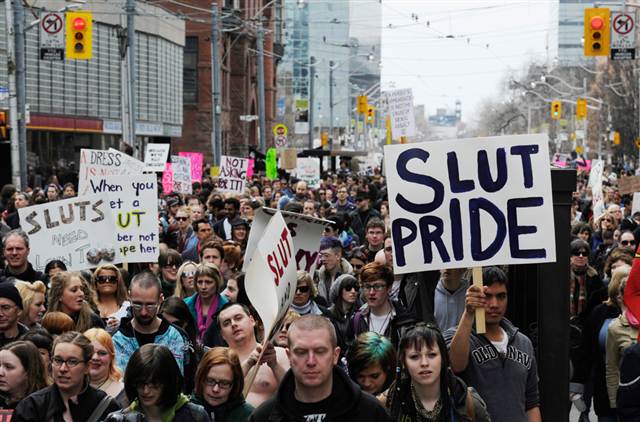
I'm not saying they're wrong, or that there isn't a societal problem. But let's not jump all over anyone who tries to offer people tips for how to avoid becoming the victim of a crime.
Constable Sanguinetti is not a great standard-bearer for law enforcement on this one. He most definitely should not have used the word "slut" in his remarks. But accusing him of "excusing rape" is sort of missing the point of what he said. He didn't say, "If you get raped, you were asking for it." He said something that is generally known across the board--that how you dress, walk, and generally present yourself affects your chances of becoming the victim of a crime.
If I tell people that they should keep their cars and dorm rooms locked, I'm not excusing the crimes of opportunity that might more likely occur if they don't. If someone steals your radio, that's a crime regardless of whether your car was locked. If someone walks into your room and pee on your floor (yes, that's a real thing), that's a pretty big deal whether or not your room was secure. They're not treated any differently.
It would be one thing to tell a woman who had been raped that it was her fault because of how she dressed, but it's another thing entirely, in the context of offering tips on crime prevention, to suggest measures that certain ways of dressing might increase the chances of being raped. It's up to you what to do with that. Not unrelatedly, statistics also show that women with long hair are more likely to be raped. Does saying that mean I'm saying women should not have long hair? No. It's just a fact.
We should live in a world where nobody has to fear sexual violence, regardless of how he or she is dressed. Heck, we should live in a world where nobody has to fear property being stolen, regardless of whether he or she locks his or her car. But until we do, let's not demonize people who are offering people advice on how to be more secure.

I'm not saying they're wrong, or that there isn't a societal problem. But let's not jump all over anyone who tries to offer people tips for how to avoid becoming the victim of a crime.
Constable Sanguinetti is not a great standard-bearer for law enforcement on this one. He most definitely should not have used the word "slut" in his remarks. But accusing him of "excusing rape" is sort of missing the point of what he said. He didn't say, "If you get raped, you were asking for it." He said something that is generally known across the board--that how you dress, walk, and generally present yourself affects your chances of becoming the victim of a crime.
If I tell people that they should keep their cars and dorm rooms locked, I'm not excusing the crimes of opportunity that might more likely occur if they don't. If someone steals your radio, that's a crime regardless of whether your car was locked. If someone walks into your room and pee on your floor (yes, that's a real thing), that's a pretty big deal whether or not your room was secure. They're not treated any differently.
It would be one thing to tell a woman who had been raped that it was her fault because of how she dressed, but it's another thing entirely, in the context of offering tips on crime prevention, to suggest measures that certain ways of dressing might increase the chances of being raped. It's up to you what to do with that. Not unrelatedly, statistics also show that women with long hair are more likely to be raped. Does saying that mean I'm saying women should not have long hair? No. It's just a fact.
We should live in a world where nobody has to fear sexual violence, regardless of how he or she is dressed. Heck, we should live in a world where nobody has to fear property being stolen, regardless of whether he or she locks his or her car. But until we do, let's not demonize people who are offering people advice on how to be more secure.
Tuesday, March 06, 2012
In which I reiterate my challenge
A year and a half ago, I challenged my reader to correctly explain the origin of my use of "In which..." for post titles.* That challenge has gone unanswered.
I'll up the ante. The person who correctly identifies the inspiration for those post titles will receive a real actual letter from me in which I ramble eloquently about something, as you occasionally see me do on this blog.
What? That's all I've got.
*I spelled this "tytles" and then "titlles." It's time for bed.
I'll up the ante. The person who correctly identifies the inspiration for those post titles will receive a real actual letter from me in which I ramble eloquently about something, as you occasionally see me do on this blog.
What? That's all I've got.
*I spelled this "tytles" and then "titlles." It's time for bed.
Monday, March 05, 2012
All the people who share my interests are hot women
Quick, imagine some nerdy gaming expert giving you the scoop on the next great video game. What's he look like?
Some chubby dude with beady eyes, greasy hair, thick glasses, and a T-shirt that says something you don't get?

I keep seeing all these tech/gaming shows or clips in which some slim, long-haired, attractive young woman alternates between playing cutesy-naive and chatting about the latest nerd news, being sure to drop comments that assure us she's played the game. And all I can do is stare incredulously, one eyebrow raised so I look like a stroke victim, thinking, this is not reality.
I'm not saying that people who are women, or people who are attractive, or people who are both, cannot be experts on tech and gaming. (Though I'm not prepared to admit that I believe these hostesses are.) I am saying that I feel this is not an accurate representation of the demographic. Am I really to believe Attack of the Show's implicit claim that the majority of the people who share my interests are women who, when not playing Mass Effect, are posing for Maxim? Or that at least two of their contributing reporters just happen to have posed for Playboy? (No, those are not links to Playboy.)
I get that this is an attractive illusion, but does it really ring true for the audience? Because me, I just feel a little insulted. If I'm going to watch a show that purports to be "TV's only source for all the stuff I care about," I think there's a reasonable expectation that the host will look more or less like me.
On the other hand, I guess G4 doesn't want to be holding up a mirror to a bunch of gamers. Because if I see a guy that looks like me reviewing Skyrim, I'm going to be thinking, "I need to turn off the X-Box and go for a run!"
Oh, and why is G4 covering the World Naked Bike Ride? Does their audience care about it, or do they just care about Sara Underwood in pasties? (Yes, that is a link to pictures of Sara Underwood in pasties.)
Finally, what's with Candace Bailey yelling out to the studio audience that she's a virgin? Is that to connect with the target demographic? Hype up her innocent, sexualized-yet-sexless persona? An unscripted moment of truth? Any sociologists up in here?
(Sorry, I couldn't find a video clip of the moment I'm referencing, though I did find the eight million ChaCha questions that nerds all over America submitted asking if it's true.)
*For the record, like most of G4's audience, I know Sara Underwood and Olivia Munn were in Playboy because I saw them on TV and Googled them--as opposed to knowing they're on TV from the reverse process.)
Some chubby dude with beady eyes, greasy hair, thick glasses, and a T-shirt that says something you don't get?

Them?
I'm not saying that people who are women, or people who are attractive, or people who are both, cannot be experts on tech and gaming. (Though I'm not prepared to admit that I believe these hostesses are.) I am saying that I feel this is not an accurate representation of the demographic. Am I really to believe Attack of the Show's implicit claim that the majority of the people who share my interests are women who, when not playing Mass Effect, are posing for Maxim? Or that at least two of their contributing reporters just happen to have posed for Playboy? (No, those are not links to Playboy.)
I get that this is an attractive illusion, but does it really ring true for the audience? Because me, I just feel a little insulted. If I'm going to watch a show that purports to be "TV's only source for all the stuff I care about," I think there's a reasonable expectation that the host will look more or less like me.
On the other hand, I guess G4 doesn't want to be holding up a mirror to a bunch of gamers. Because if I see a guy that looks like me reviewing Skyrim, I'm going to be thinking, "I need to turn off the X-Box and go for a run!"
Oh, and why is G4 covering the World Naked Bike Ride? Does their audience care about it, or do they just care about Sara Underwood in pasties? (Yes, that is a link to pictures of Sara Underwood in pasties.)
Finally, what's with Candace Bailey yelling out to the studio audience that she's a virgin? Is that to connect with the target demographic? Hype up her innocent, sexualized-yet-sexless persona? An unscripted moment of truth? Any sociologists up in here?
(Sorry, I couldn't find a video clip of the moment I'm referencing, though I did find the eight million ChaCha questions that nerds all over America submitted asking if it's true.)
*For the record, like most of G4's audience, I know Sara Underwood and Olivia Munn were in Playboy because I saw them on TV and Googled them--as opposed to knowing they're on TV from the reverse process.)
Sunday, February 26, 2012
The kind for clothes, not the small metal disc
I do not, in my moments of experiencing life, think, "I will blog about this later," which means that by the time I think "This would be cool to document photographically," "this" is a thing past. So I am sorry, but this post is not accompanied by pictures. I am not her or her.
(The latter is my second cousin, whom I haven't actually seen since I was like I don't know seven. Gotta love internets.)
I have been without a washer/dryer in-house since my last year of college (and that was a one-year island in a six-year stretch of laundry rooms and lavadarías). I have been fortunate, though, in having friends who have this equipment, and who don't point out that my detergent contribution does not balance out my use of their facilities. Recently, those friends all moved away.
This got me seriously considering taking advantage of those washer/dryer hookups in my apartment. Obstacle: I am poor, and twenty-five years of mommies, paid services and generous friends have left me with a firm belief that the ability to wash one's clothes is not the sort of thing that should cost six hundred dollars.
Solution: Steal the washer some friends left in the basement of their rental. This was a process that involved using a co-worker (Mark) for his truck and said co-worker's cousin for his dolly. Many curses and a near-decapitation later, the machine had been moved from a basement on the west side of town to a second floor on the east. There was still no dryer (the available one was gas, and our hookup purely electric), but that is only the second-most important part of the set.
Problem: We broke the washer. We did a lot of hauling it on its side, and we banged it around a lot, including a good six-inch drop while going down some steps. Your phone, unless it is an iPhone, is made to survive a six-inch fall. Washers are not. (Consider that force is a function of mass.) Somewhere in there we broke a stabilizer, which is the part of the washer that distinguishes it from an earthquake simulator.
Running the washer with a broken stabilizer loosed the drain hose or something, because after two loads there was suddenly water coming out from underneath during the spin cycle. Annoying in your concrete basement; unacceptable on carpet and tile in your second-floor apartment which is owned by a water-paranoid landlord.
Now, occasionally I get all caught up in gender roles and decide I am going to fix something. Usually this does not go well. I pried the back off the washer, adhering to the "screw it, I'll just rip this off and worry about it later" school of thought. Not finding anything visibly amiss, I decided to run it open to see if I could spot the leak.
I sure as heck did something wrong, because now all water input poured directly out onto the floor, and I have no idea why. Also, I could not get it back together without liberal use of duct tape. Also, don't plug your washer in with wet hands, because it will shock you and you will cry, and that will not help you feel like a manly Mr. Fixit.
New solution: Snag a 20-year-old washer (and a nice dryer) from my co-worker's co-worker (it's sort of like a second cousin), who is getting a new one. I spent my Saturday moving various boxes and washer-dryers for various people to make this score, making me feel like Link trading his way to the magnifying lens in order to open the Wind Fish's Egg.
A couple replaced hoses and a minor repair involving a twisty-tie later, all is set. Except what to do with the first washer?
Mark suggested we put it in the alley and see what happens, assuring me someone would claim it. I was dubious as to whether this would happen, but agreed with him on the point of "we can always claim no knowledge of this and hope nobody saw us leave it." So in the alley I abandoned my first washer, awaiting a my fine for illegal dumping.
It was gone within hours. Hours. Hauled away, presumedly, for scrap.
But isn't that impressive? A box filled with washers of the other variety, sure, easy pickings. But what took us a week of planning, two people, a dolly and a truck, someone else seems to have accomplished as an afterthought on their way home.
There is an ecosystem here in Richmond--I've known that since I noted that my recyclables were always collected long before garbage day. Lurking out there in the alleys, unseen in the daylight, are the scrappers. The scavenger class. The Jawas of the Whitewater Valley. Like piranhas on a cow, they make off with what would seem to be challenging targets.
I have a tickling desire to start a series of experiments to see what they'll take. I'm thinking a box labeled "used hypodermic needles and scrap metal."
(The latter is my second cousin, whom I haven't actually seen since I was like I don't know seven. Gotta love internets.)
I have been without a washer/dryer in-house since my last year of college (and that was a one-year island in a six-year stretch of laundry rooms and lavadarías). I have been fortunate, though, in having friends who have this equipment, and who don't point out that my detergent contribution does not balance out my use of their facilities. Recently, those friends all moved away.
This got me seriously considering taking advantage of those washer/dryer hookups in my apartment. Obstacle: I am poor, and twenty-five years of mommies, paid services and generous friends have left me with a firm belief that the ability to wash one's clothes is not the sort of thing that should cost six hundred dollars.
Solution: Steal the washer some friends left in the basement of their rental. This was a process that involved using a co-worker (Mark) for his truck and said co-worker's cousin for his dolly. Many curses and a near-decapitation later, the machine had been moved from a basement on the west side of town to a second floor on the east. There was still no dryer (the available one was gas, and our hookup purely electric), but that is only the second-most important part of the set.
Problem: We broke the washer. We did a lot of hauling it on its side, and we banged it around a lot, including a good six-inch drop while going down some steps. Your phone, unless it is an iPhone, is made to survive a six-inch fall. Washers are not. (Consider that force is a function of mass.) Somewhere in there we broke a stabilizer, which is the part of the washer that distinguishes it from an earthquake simulator.
Running the washer with a broken stabilizer loosed the drain hose or something, because after two loads there was suddenly water coming out from underneath during the spin cycle. Annoying in your concrete basement; unacceptable on carpet and tile in your second-floor apartment which is owned by a water-paranoid landlord.
Now, occasionally I get all caught up in gender roles and decide I am going to fix something. Usually this does not go well. I pried the back off the washer, adhering to the "screw it, I'll just rip this off and worry about it later" school of thought. Not finding anything visibly amiss, I decided to run it open to see if I could spot the leak.
I sure as heck did something wrong, because now all water input poured directly out onto the floor, and I have no idea why. Also, I could not get it back together without liberal use of duct tape. Also, don't plug your washer in with wet hands, because it will shock you and you will cry, and that will not help you feel like a manly Mr. Fixit.
New solution: Snag a 20-year-old washer (and a nice dryer) from my co-worker's co-worker (it's sort of like a second cousin), who is getting a new one. I spent my Saturday moving various boxes and washer-dryers for various people to make this score, making me feel like Link trading his way to the magnifying lens in order to open the Wind Fish's Egg.
A couple replaced hoses and a minor repair involving a twisty-tie later, all is set. Except what to do with the first washer?
Mark suggested we put it in the alley and see what happens, assuring me someone would claim it. I was dubious as to whether this would happen, but agreed with him on the point of "we can always claim no knowledge of this and hope nobody saw us leave it." So in the alley I abandoned my first washer, awaiting a my fine for illegal dumping.
It was gone within hours. Hours. Hauled away, presumedly, for scrap.
But isn't that impressive? A box filled with washers of the other variety, sure, easy pickings. But what took us a week of planning, two people, a dolly and a truck, someone else seems to have accomplished as an afterthought on their way home.
There is an ecosystem here in Richmond--I've known that since I noted that my recyclables were always collected long before garbage day. Lurking out there in the alleys, unseen in the daylight, are the scrappers. The scavenger class. The Jawas of the Whitewater Valley. Like piranhas on a cow, they make off with what would seem to be challenging targets.
I have a tickling desire to start a series of experiments to see what they'll take. I'm thinking a box labeled "used hypodermic needles and scrap metal."
Friday, January 20, 2012

Thursday, December 22, 2011
Sunday, November 20, 2011
Concerning the spelling of my (nick)name
This came up on another blog I write for, and I didn't want to waste their time with it.
My name is Nicolas.
N-I-C-O-L-A-S.
As you may have noticed, there is no H. Many miss this, and spell my name with an H. That's OK. I understand. My parents were cruel and decided to spell my name as if I were some sort of frenchman. It's not your fault that it's an uncommon spelling, and I don't blame you for the oversight. I've been known to spell "Lindsey" with an A or forget the H in "Meghan" (but seriously, Meghan?). It's considerably more annoying when someone hands me a sign-up form on which I write my name, and then I find I'm in the system as Nicholas. Like, yeah, I spelled my own name wrong. Thanks for catching that.
Jackass.
"Nicolas or Nick?" teachers would always ask. "I don't care," I told them. "I don't care" was frequently interpreted as "Nick," because in America we are always in a hurry and cannot waste time with extraneous syllables. I became accustomed to this, and started telling people I was Nick. "Nicolas" became reserved for doctor's appointments and angry mothers. The only downside to "Nick" is that my last name also starts with a K, and the words kind of blend together when I'm introducing myself.
Nick has always been spelled with a K. The "normal" way, y'know?
Always, that is, until my freshman year of college, when Dr. Weller started addressing me as "Nic" in e-mails. He even said my name differently. Usually the K at the end is pretty hard. Weller would leave it almost silent at the end, so you could hear that there was no K. "OK," I thought, "cool." I'm used to my full name being spelled differently; it only seemed right that my nickname would be different too.
A girlfriend picked it up. Then her dad. And without known cause, like a virus mysteriously leaping cities, suddenly it was everywhere. In the Church. In the blogosphere. On Facebook.
Presumably, my use of the name "Nicolas" on Facebook left room for ambiguity as to the spelling of my nickname, and the Latiny spelling encouraged people not to use a K. I never told anyone not to, yet it seems to be the trend.
I still sign my own name as "Nick." That's how it's always been, and I refuse to be one of those people who suddenly insists his name is different from what it's always been. I know a Sonya who suddenly became Sonja. Not for me.
I encourage others to continue their modified spelling, telling them there's no correct spelling of a nickname. I like it. I just can't do it myself.
(I guess this actually makes me just like Sony/ja, who continued to introduce herself as Sonya while asking everyone else to call her Sonja.)
Now you know.
My name is Nicolas.
N-I-C-O-L-A-S.
As you may have noticed, there is no H. Many miss this, and spell my name with an H. That's OK. I understand. My parents were cruel and decided to spell my name as if I were some sort of frenchman. It's not your fault that it's an uncommon spelling, and I don't blame you for the oversight. I've been known to spell "Lindsey" with an A or forget the H in "Meghan" (but seriously, Meghan?). It's considerably more annoying when someone hands me a sign-up form on which I write my name, and then I find I'm in the system as Nicholas. Like, yeah, I spelled my own name wrong. Thanks for catching that.
Jackass.
"Nicolas or Nick?" teachers would always ask. "I don't care," I told them. "I don't care" was frequently interpreted as "Nick," because in America we are always in a hurry and cannot waste time with extraneous syllables. I became accustomed to this, and started telling people I was Nick. "Nicolas" became reserved for doctor's appointments and angry mothers. The only downside to "Nick" is that my last name also starts with a K, and the words kind of blend together when I'm introducing myself.
Nick has always been spelled with a K. The "normal" way, y'know?
Always, that is, until my freshman year of college, when Dr. Weller started addressing me as "Nic" in e-mails. He even said my name differently. Usually the K at the end is pretty hard. Weller would leave it almost silent at the end, so you could hear that there was no K. "OK," I thought, "cool." I'm used to my full name being spelled differently; it only seemed right that my nickname would be different too.
A girlfriend picked it up. Then her dad. And without known cause, like a virus mysteriously leaping cities, suddenly it was everywhere. In the Church. In the blogosphere. On Facebook.
Presumably, my use of the name "Nicolas" on Facebook left room for ambiguity as to the spelling of my nickname, and the Latiny spelling encouraged people not to use a K. I never told anyone not to, yet it seems to be the trend.
I still sign my own name as "Nick." That's how it's always been, and I refuse to be one of those people who suddenly insists his name is different from what it's always been. I know a Sonya who suddenly became Sonja. Not for me.
I encourage others to continue their modified spelling, telling them there's no correct spelling of a nickname. I like it. I just can't do it myself.
(I guess this actually makes me just like Sony/ja, who continued to introduce herself as Sonya while asking everyone else to call her Sonja.)
Now you know.
Thursday, November 03, 2011

Sunday, July 31, 2011
The ethics of multiple universes
My friend and host, Tucker, her son and I watched Source Code the other night. Starring Jake Gyllenhaal and Vera Farmiga, it's one of those thrillers with a sci-fi twist that manages not to be sci-fi. It's a fun watch, which is probably why nobody liked my constant philosophizing.
Spoilers follow (don't worry, you don't care).
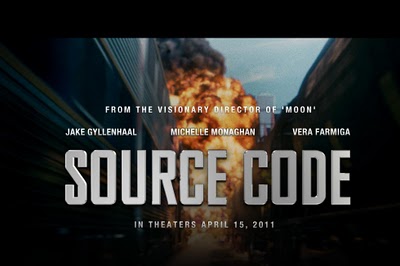
So the premise of the movie is that a terrorist attack has destroyed a commuter train in Chicago, killing dozens of people. Authorities suspect that it is a precursor to a much larger attack, so they need to find out who's behind it.
Luckily, there's Source Code, a top-secret military project that is able to take the consciousness out of an almost-dead blown-up helicopter pilot (Gyllenhaal) and put it into the body of someone on the train, hours earlier. They can do it for eight minutes at a time, and the goal of each eight-minute mission is to find the identity of the bomber so they can catch him in the present.
But he's not a mere observer. He can get up, go places and find information that his host didn't know. He can even deactivate the bomb or get the pretty girl across from him off the train--though he's told that this doesn't actually change anything. If it does have an effect, it's on a different reality than his own. This would fall under the many-worlds interpretation of quantum mechanics: every time he changes something in the past, a new universe is created in which those events occurred. If we assume this is the case, it's not a great leap to assume a new universe is created every time he goes back, since all he has to do is breathe in a slightly different pattern or say one word differently to create a new reality--even if it's practically identical to one that was already created.
We do eventually get confirmation that this is what is happening, because after he completes his mission and allows the people running him to capture the bomber, he insists on going back one last time to try what he has so far failed to do: save every person on the train. He knows it doesn't mean anything; he just wants to do it. At the end of this mission, Vera Farmiga agrees, his mutilated body will be taken off life support.
Naturally, Gyllenhaal rocks it. He disarms the bomb (both detonators this time), apprehends the bomber, and calls in the authorities. He also sends a quick e-mail and calls his father, who already thinks him dead, to speak with him one last time. He asks the pretty girl out, and at the end of the eight minutes, just as Farmiga is taking him off life support, kisses her passionately.
And then... he keeps kissing her. Apparently when his body finally dies in his reality, his consciousness doesn't snap back. He gets to remain in his new body with his new identity. He teaches everybody on the train a valuable lesson about enjoying life by paying a grumpy guy $100 to do a stand-up routine, then skips work and goes to Millennium Park.
Meanwhile, the Vera Farmiga of that reality is just starting her day when she gets an e-mail. It's from Gyllenhaal. "You should be seeing a story about a thwarted terrorist attack. You and I stopped it together, and Source Code works better than you ever imagined." See, while in his reality he only managed to stop the second attack, in this new reality, he stopped the first one, too. This is how we know it's the multiple universes thing and not just a meaningless eight-minute simulation.
Still with me?
There are some ethical concerns here. Firstly, what happened to the guy whose body he took over? Has his consciousness been permanently replaced by Gyllenhaal's?
But the real question I was left with was, is his use of time-travel ethical?
With the exception of the last instance, every time Gyllenhaal goes back, the train is destroyed. So every time he is creating another universe in which the terrorist attack--and the much larger second attack, which supposedly destroys downtown Chicago--occurs, all in the name of stopping one of the attacks in the reality he's from. He is ensuring the bigger attack happens a half-dozen more times, across all realities, in the name of stopping it from happening once in his reality.
The question is, do people in other realities have standing?
My friend Sam, a philosophy major I met here in California, suggested that another consequence of considering the moral standing of people in other realities is that it can serve to de-value the suffering in our own reality. If there are infinite realities with infinite people suffering infinitely, does one person suffering here even matter? If such de-valuation is a danger, should that be used as a point of argument for caring only about our own reality? Or should we have a "prime directive" that forbids interfering with other realities (and would essentially outlaw Source Code, since it does just that)?
Steve?
Spoilers follow (don't worry, you don't care).
So the premise of the movie is that a terrorist attack has destroyed a commuter train in Chicago, killing dozens of people. Authorities suspect that it is a precursor to a much larger attack, so they need to find out who's behind it.
Luckily, there's Source Code, a top-secret military project that is able to take the consciousness out of an almost-dead blown-up helicopter pilot (Gyllenhaal) and put it into the body of someone on the train, hours earlier. They can do it for eight minutes at a time, and the goal of each eight-minute mission is to find the identity of the bomber so they can catch him in the present.
But he's not a mere observer. He can get up, go places and find information that his host didn't know. He can even deactivate the bomb or get the pretty girl across from him off the train--though he's told that this doesn't actually change anything. If it does have an effect, it's on a different reality than his own. This would fall under the many-worlds interpretation of quantum mechanics: every time he changes something in the past, a new universe is created in which those events occurred. If we assume this is the case, it's not a great leap to assume a new universe is created every time he goes back, since all he has to do is breathe in a slightly different pattern or say one word differently to create a new reality--even if it's practically identical to one that was already created.
We do eventually get confirmation that this is what is happening, because after he completes his mission and allows the people running him to capture the bomber, he insists on going back one last time to try what he has so far failed to do: save every person on the train. He knows it doesn't mean anything; he just wants to do it. At the end of this mission, Vera Farmiga agrees, his mutilated body will be taken off life support.
Naturally, Gyllenhaal rocks it. He disarms the bomb (both detonators this time), apprehends the bomber, and calls in the authorities. He also sends a quick e-mail and calls his father, who already thinks him dead, to speak with him one last time. He asks the pretty girl out, and at the end of the eight minutes, just as Farmiga is taking him off life support, kisses her passionately.
And then... he keeps kissing her. Apparently when his body finally dies in his reality, his consciousness doesn't snap back. He gets to remain in his new body with his new identity. He teaches everybody on the train a valuable lesson about enjoying life by paying a grumpy guy $100 to do a stand-up routine, then skips work and goes to Millennium Park.
Meanwhile, the Vera Farmiga of that reality is just starting her day when she gets an e-mail. It's from Gyllenhaal. "You should be seeing a story about a thwarted terrorist attack. You and I stopped it together, and Source Code works better than you ever imagined." See, while in his reality he only managed to stop the second attack, in this new reality, he stopped the first one, too. This is how we know it's the multiple universes thing and not just a meaningless eight-minute simulation.
Still with me?
There are some ethical concerns here. Firstly, what happened to the guy whose body he took over? Has his consciousness been permanently replaced by Gyllenhaal's?
But the real question I was left with was, is his use of time-travel ethical?
With the exception of the last instance, every time Gyllenhaal goes back, the train is destroyed. So every time he is creating another universe in which the terrorist attack--and the much larger second attack, which supposedly destroys downtown Chicago--occurs, all in the name of stopping one of the attacks in the reality he's from. He is ensuring the bigger attack happens a half-dozen more times, across all realities, in the name of stopping it from happening once in his reality.
The question is, do people in other realities have standing?
My friend Sam, a philosophy major I met here in California, suggested that another consequence of considering the moral standing of people in other realities is that it can serve to de-value the suffering in our own reality. If there are infinite realities with infinite people suffering infinitely, does one person suffering here even matter? If such de-valuation is a danger, should that be used as a point of argument for caring only about our own reality? Or should we have a "prime directive" that forbids interfering with other realities (and would essentially outlaw Source Code, since it does just that)?
Steve?
Saturday, July 30, 2011
Creature of the night
I have long been a bit of a night owl. In part because I am a genius, no doubt, but likely also because I got my own computer when I was in the seventh grade, and hours-long AOL chats with my unrequited love and marathon sessions of designing new levels for "X-Wing vs. TIE Fighter" both forced me to stay awake late. (I also failed three classes in the eighth grade and had my calculus teacher tell me I would not graduate high school.)
It gets worse, of course, during bouts of depression, when I simply never bother to go to bed because there's nothing to look forward to when I wake up.
Though I now have my own apartment, I've lived most of my life with other people, so I am accustomed to sneaking about in the dark, trying to minimize the sounds I make. I knew just how to distribute my weight in our creaky house to make the stairs and hallway a little less creaky (that was the best I could do). Everywhere I lived, I have a distinct memory of what it's like in the dark, as I feel my way around. Home. College. Mexico. I usually manage to pull off this lurking with minimal disturbance to others.
Of course, there are times when it all fails spectacularly. Once, I was trying to sneak up from the basement (the location of my computer at the time) late at night when our dog, who had never displayed any signs of being useful, decided that was the night he would try out the "guard dog" thing. Nothing ruins a subtle entry like a barking dog. There was the time I had so much trouble with my key that my host dad had to come downstairs and let me in the house.
And there was tonight, when the whole damn house woke up thanks to the stupid cat.
As the last one to bed, it is often my duty to close the cat in the kitchen/dining room area of the house at night. This usually just entails closing two doors, since the cat tends to stay in that territory anyway. Tonight, though, I couldn't find her anywhere. Fifteen minutes I circled around and around the first floor of the house, searching.
Wondering if she slipped outside while the dogs were out, I opened the front door as quietly as possible and stepped out. Honestly, it was almost silent. Except when the door kept opening all on its own, and bumped against the painting on the wall. Repeatedly. It sounded like someone was banging to be let in.
I dashed back inside and carefully closed the door. Now I heard some shifting of weight upstairs, but I decided it was unrelated to me. I continued my search.
Meow, the cat said, upstairs. The cat usually doesn't go upstairs, but tonight she decided to mess with me. I made for the stairs, and could now hear Doug (another tenant) moving about on the second floor. Doug had come to investigate the door banging, lest I be one of Berkeley's axe murderers.
"Is the cat up there?" I stage whispered.
After he challenged me for my identity (what, like I'm a burglar who inquires about the cat?), he went to fetch the cat.
There are also two dogs in this house, and one of them hates Doug. When he called out for the cat, the dog lost it, and all hell broke loose. Soon the homeowner was awake, lights were on, and retrieving the cat was no longer a covert operation.
Fail.
If I had my way, that animal would be denied breakfast.
It gets worse, of course, during bouts of depression, when I simply never bother to go to bed because there's nothing to look forward to when I wake up.
Though I now have my own apartment, I've lived most of my life with other people, so I am accustomed to sneaking about in the dark, trying to minimize the sounds I make. I knew just how to distribute my weight in our creaky house to make the stairs and hallway a little less creaky (that was the best I could do). Everywhere I lived, I have a distinct memory of what it's like in the dark, as I feel my way around. Home. College. Mexico. I usually manage to pull off this lurking with minimal disturbance to others.
Of course, there are times when it all fails spectacularly. Once, I was trying to sneak up from the basement (the location of my computer at the time) late at night when our dog, who had never displayed any signs of being useful, decided that was the night he would try out the "guard dog" thing. Nothing ruins a subtle entry like a barking dog. There was the time I had so much trouble with my key that my host dad had to come downstairs and let me in the house.
And there was tonight, when the whole damn house woke up thanks to the stupid cat.
As the last one to bed, it is often my duty to close the cat in the kitchen/dining room area of the house at night. This usually just entails closing two doors, since the cat tends to stay in that territory anyway. Tonight, though, I couldn't find her anywhere. Fifteen minutes I circled around and around the first floor of the house, searching.
Wondering if she slipped outside while the dogs were out, I opened the front door as quietly as possible and stepped out. Honestly, it was almost silent. Except when the door kept opening all on its own, and bumped against the painting on the wall. Repeatedly. It sounded like someone was banging to be let in.
I dashed back inside and carefully closed the door. Now I heard some shifting of weight upstairs, but I decided it was unrelated to me. I continued my search.
Meow, the cat said, upstairs. The cat usually doesn't go upstairs, but tonight she decided to mess with me. I made for the stairs, and could now hear Doug (another tenant) moving about on the second floor. Doug had come to investigate the door banging, lest I be one of Berkeley's axe murderers.
"Is the cat up there?" I stage whispered.
After he challenged me for my identity (what, like I'm a burglar who inquires about the cat?), he went to fetch the cat.
There are also two dogs in this house, and one of them hates Doug. When he called out for the cat, the dog lost it, and all hell broke loose. Soon the homeowner was awake, lights were on, and retrieving the cat was no longer a covert operation.
Fail.
If I had my way, that animal would be denied breakfast.
Tuesday, July 26, 2011
The PayPal Chronicles
Once upon a time, a fraudulent charge for $900 appeared on my PayPal account. As in, I got an e-mail confirming a payment of $900 that I had never authorized, to a recipient I had never heard of. Since my PayPal account was linked to my checking account, they tried to withdraw the money directly. Three times.
Luckily, $900 was so far beyond the laughable amount of money in my checking account that the transaction was simply denied, all three times.
I immediately filed a claim of unauthorized access to my account with PayPal. A few days later, I got an e-mail informing me my claim had been denied. And that was that. There's no further appeal process when it comes to PayPal. They're not a bank, and aren't regulated like a bank, and they pull out of any country that tries to regulate them like a bank. So once they decide the activity isn't fraudulent, there is absolutely, positively nothing you can do about it. If they'd gotten that $900, I would never have gotten it back.
I closed my bank account and abandoned my PayPal account. They want to make me pay? They can sue me.
Some years later, I decided I actually did need a PayPal account in order to do some freelance work. So I opened up a new account with as much different information as I could.
Some more years later, I wanted to buy my roommate Steve some shot glasses on eBay. For reasons I can't remember, I wasn't able to use my credit card to pay (maybe I didn't add it in time and the payment was due?), so I did the stupidest thing of my life (based on the action itself, not the consequences) and signed up for something called "PayPal Buyer Credit." As in, they cover those $16 shot glasses for me for a mere, I don't know, say $52.
For other reasons I can't remember, at some point a phone call was necessary in relation to my Buyer Credit account. The man at the other end of the line was very adamant that I just link up my bank account with them.
"My concern," I said, "is that if someone were to break in to my account and send themselves like $900, and PayPal decided to deny my claim about it, you could just take it from my bank account and I would have no recourse."
"Oh, that could never happen," he said.
I actually went to the expense of sending them a money order to pay off my Buyer Credit account, just to make sure they didn't snag the routing number off my check and tap into my account without my permission. When I used Buyer Credit again last year (accidentally), I paid it off by sending a check to a special, alternate address that the very fine print of the contract said I should use if I didn't want to authorize them to take funds out electronically.
I have been uncharacteristically sharp when it comes to these guys. Fool me once...
Anyway, I just got an e-mail to my old college e-mail account regarding my original PayPal account. "Our records show that you are the owner of a derelict PayPal account with a balance of $30," it said. "To claim the funds..." blah blah blah.
NO MENTION of the $900 I owe them. Just $30 that's all mine; all I have to do is confirm that I exist!
I'll let Admiral Ackbar take this one:

Yes, thank you, Admiral. E-mail deleted.
Luckily, $900 was so far beyond the laughable amount of money in my checking account that the transaction was simply denied, all three times.
I immediately filed a claim of unauthorized access to my account with PayPal. A few days later, I got an e-mail informing me my claim had been denied. And that was that. There's no further appeal process when it comes to PayPal. They're not a bank, and aren't regulated like a bank, and they pull out of any country that tries to regulate them like a bank. So once they decide the activity isn't fraudulent, there is absolutely, positively nothing you can do about it. If they'd gotten that $900, I would never have gotten it back.
I closed my bank account and abandoned my PayPal account. They want to make me pay? They can sue me.
Some years later, I decided I actually did need a PayPal account in order to do some freelance work. So I opened up a new account with as much different information as I could.
Some more years later, I wanted to buy my roommate Steve some shot glasses on eBay. For reasons I can't remember, I wasn't able to use my credit card to pay (maybe I didn't add it in time and the payment was due?), so I did the stupidest thing of my life (based on the action itself, not the consequences) and signed up for something called "PayPal Buyer Credit." As in, they cover those $16 shot glasses for me for a mere, I don't know, say $52.
For other reasons I can't remember, at some point a phone call was necessary in relation to my Buyer Credit account. The man at the other end of the line was very adamant that I just link up my bank account with them.
"My concern," I said, "is that if someone were to break in to my account and send themselves like $900, and PayPal decided to deny my claim about it, you could just take it from my bank account and I would have no recourse."
"Oh, that could never happen," he said.
I actually went to the expense of sending them a money order to pay off my Buyer Credit account, just to make sure they didn't snag the routing number off my check and tap into my account without my permission. When I used Buyer Credit again last year (accidentally), I paid it off by sending a check to a special, alternate address that the very fine print of the contract said I should use if I didn't want to authorize them to take funds out electronically.
I have been uncharacteristically sharp when it comes to these guys. Fool me once...
Anyway, I just got an e-mail to my old college e-mail account regarding my original PayPal account. "Our records show that you are the owner of a derelict PayPal account with a balance of $30," it said. "To claim the funds..." blah blah blah.
NO MENTION of the $900 I owe them. Just $30 that's all mine; all I have to do is confirm that I exist!
I'll let Admiral Ackbar take this one:

Yes, thank you, Admiral. E-mail deleted.
Sunday, July 24, 2011
Diet, not exercise
I'm getting both in Berkeley. Probably both because I don't drive. Without a vehicular commute, there's never any temptation to just go ahead and swing through Arby's. ("This roast turkey & swiss sandwich is healthy, so by getting it, I earned the mozzarella sticks"). I'm too afraid of looking incompetent to try the unfamiliar bus system, so walking it is. Seven miles at a time, when Brandi has something to say about it.
But I haven't been going for runs like I wanted to, and have only scaled the nearby hill (mountain) a handful of times. I've spent weeks practically without leaving the house, thanks in part to laziness but largely due to a foot injury. Yet my weight is as low as it's been in two years, and if I shed another pound or two I'll weigh less than I did since I started my last year of college. I weigh the same now as I did last summer, when I was obsessively running up to three miles a day. And I'm chalking it up to the good ol' California diet (not counting a night of In 'n Out. Bloated, but worth it).
I've read that exercise can keep weight off, but diet is really the only good way to lose it in the first place. I'll buy that.
(Mark thinks he lost a hundred pounds or so from walking around all day, but I think it has more to do with his daily intake of about 45 calories.)
But I haven't been going for runs like I wanted to, and have only scaled the nearby hill (mountain) a handful of times. I've spent weeks practically without leaving the house, thanks in part to laziness but largely due to a foot injury. Yet my weight is as low as it's been in two years, and if I shed another pound or two I'll weigh less than I did since I started my last year of college. I weigh the same now as I did last summer, when I was obsessively running up to three miles a day. And I'm chalking it up to the good ol' California diet (not counting a night of In 'n Out. Bloated, but worth it).
I've read that exercise can keep weight off, but diet is really the only good way to lose it in the first place. I'll buy that.
(Mark thinks he lost a hundred pounds or so from walking around all day, but I think it has more to do with his daily intake of about 45 calories.)
Saturday, July 23, 2011
Lest you think me a good person
I saw Crazy Carl again today. I was just rounding the corner at the bottom of my street, headed for the store to buy some tortilla chips because mine were missing and the two bags I found were stale. Not "oh these are stale" stale, but "I can't swallow this so instead I will spit it into the trash" stale. And there was ol' Carl, wearing the same clothes as before. I didn't check to see if he bought new socks with my money. Instead I tugged my baseball cap lower across my eyes and sped past him. There was a bit of a crowd there, thanks to the bus stop, and his gaze was cast downward, so I think I got away without him recognizing me. Or at least without him knowing I recognized him.
As I returned from the store, I looked cautiously about. No Carl down the street. No carl visible around the corner (the two glass walls of the café allow for such foresight). I turned onto my street and there he was, up the road, walking towards me. I immediately (and obviously) changed direction and bolted across the street. I didn't feel quite secure on the other side, though, so I actually walked three blocks out of my way so as not to pass him.
Not that I'm afraid of Crazy Carl, even with his pipe (the metal hitting people in the head kind, not the crack kind). I just wasn't feeling another hour-plus conversation.
As I returned from the store, I looked cautiously about. No Carl down the street. No carl visible around the corner (the two glass walls of the café allow for such foresight). I turned onto my street and there he was, up the road, walking towards me. I immediately (and obviously) changed direction and bolted across the street. I didn't feel quite secure on the other side, though, so I actually walked three blocks out of my way so as not to pass him.
Not that I'm afraid of Crazy Carl, even with his pipe (the metal hitting people in the head kind, not the crack kind). I just wasn't feeling another hour-plus conversation.
Subscribe to:
Posts (Atom)